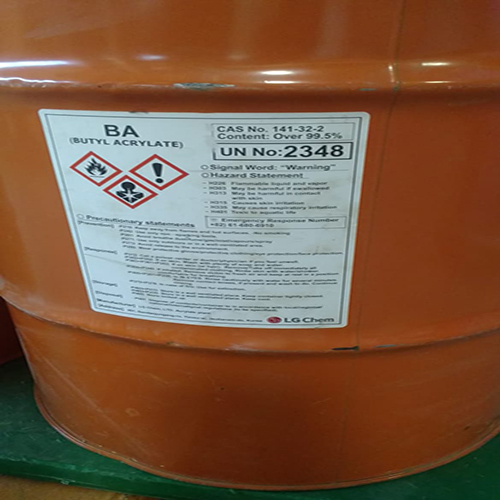
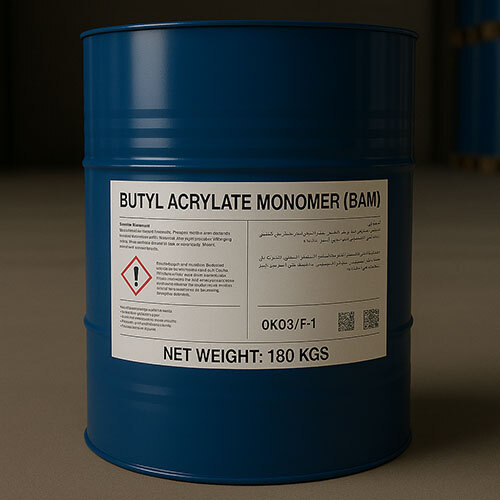
BUTYL ACRYLATE MONOMER (BAM)

BUTYL ACRYLATE MONOMER (BAM)

MOQ : 200 Kilograms

BUTYL ACRYLATE MONOMER (BAM) Specification

  • EINECS No
  • 205-480-7
  • Molecular Weight
  • 128.171 gmol1 Kilograms (kg)
  • Storage
  • Other
  • Properties
  • BUTYL ACRYLATE (BAM) colorless liquid, it is the butyl ester of acrylic acid. It is used commercially on a large scale as a precursor to polybutylacrylate, which is used in paints, sealants, coatings, adhesives, fuel, textiles, plastics, and caulk.
  • Appearance
  • Colourless liquid
  • Usage
  • Butyl Acrylate Monomer (BAM) is used in paints, sealants, coatings, adhesives, fuel, textiles, plastics, and caulk.
  • Application
  • Industrial
  • Molecular Formula
  • C7H12O2
  • Grade
  • Industrial
  • Density
  • 0.89 g/mL (20C Kilogram per cubic meter (kg/m3)
  • Physical Form
  • Liquid
  • Melting Point
  • 64 C
  • CAS No
  • 141-32-2
 

BUTYL ACRYLATE MONOMER (BAM) Trade Information

  • Minimum Order Quantity
  • 200 Kilograms
  • Supply Ability
  • 2000 Kilograms Per Month
  • Delivery Time
  • 7 Days
 

About BUTYL ACRYLATE MONOMER (BAM)

Product Overview:

Butyl Acrylate Monomer (BAM) is a versatile, high-performance acrylate used in the production of adhesives, coatings, sealants, and elastomers. This clear, colorless liquid is known for its excellent flexibility, adhesion, and weather resistance, making it a key component in polymer emulsions and specialty formulations. BAM is widely used in both water-based and solvent-based systems, offering outstanding film-forming properties.


Key Features & Benefits:

Excellent Flexibility Provides elasticity and impact resistance in coatings and adhesives.
Superior Adhesion Ensures strong bonding in industrial and commercial applications.
Good Weather & UV Resistance Enhances durability for outdoor use.
Low-Temperature Performance Maintains flexibility even in extreme conditions.
High Compatibility Easily copolymerizes with other acrylates and monomers.


Applications:

Architectural & Industrial Coatings: Provides long-lasting protection and flexibility.
Adhesives & Sealants: Enhances bonding strength and durability.
Textile & Leather Finishes: Adds softness and water resistance.
Paper Coatings: Improves printability and surface performance.
Elastomers & Plastics: Used for impact-resistant and flexible polymers.


Get in Touch Today!


Request a Quote | Order a Sample | Speak to Our Experts


Versatile Industrial Applications

Butyl Acrylate Monomer (BAM) is essential in various industries due to its compatibility and effectiveness as a precursor in producing polybutylacrylate. It is extensively used in the manufacture of paints, sealants, coatings, adhesives, plastics, textiles, caulk, and fuel additives. Its adaptability streamlines processes across construction, automotive, textile, and packaging sectors.


Physical and Chemical Properties

BAM appears as a colorless liquid with a molecular formula of C7H12O2 and a density of 0.89 g/mL at 20C. It has a low melting point of approximately 64C, making it easy to store and handle in diverse climates. As the butyl ester of acrylic acid, BAM provides exceptional reactivity, key for polymerization and industrial synthesis.

FAQs of BUTYL ACRYLATE MONOMER (BAM):


Q: How is Butyl Acrylate Monomer (BAM) commonly used in industry?

A: BAM is predominantly used in the production of polybutylacrylate, which is a vital ingredient in paints, adhesives, coatings, sealants, plastics, textiles, fuel additives, and caulks. Its wide applicability makes it a staple ingredient in manufacturing and formulation processes.

Q: What are the benefits of using BAM in manufacturing processes?

A: Butyl Acrylate Monomer enhances product flexibility, durability, and weather resistance, especially in paints and coatings. Its ability to polymerize readily facilitates efficient production of adhesives, sealants, and other construction and textile materials.

Q: Where is BAM typically sourced or supplied from?

A: BAM is produced and distributed globally. Major suppliers, exporters, and manufacturers are based in China, which is a significant hub for international trade and distribution of this chemical.

Q: What is the process for converting BAM into polybutylacrylate?

A: BAM undergoes a free-radical polymerization process, which involves using initiators to link BAM molecules into long polymer chains, resulting in polybutylacrylate. This polymer is then formulated into various end products, such as paints and adhesives.

Q: When should BAM be handled with caution?

A: As an industrial chemical with a low melting point and liquid form, BAM should always be handled with appropriate safety measures to avoid exposure or spills. Proper personal protective equipment and ventilation are recommended during storage and handling.

Q: What distinguishes BAM from other acrylate monomers?

A: BAMs distinctive butyl group gives the resulting polymer enhanced flexibility and lower glass transition temperature than other acrylate monomers, making it especially suitable for flexible and soft applications including adhesives and soft plastics.

Tell us about your requirement
product

Price:

Quantity
Select Unit

  • 50
  • 100
  • 200
  • 250
  • 500
  • 1000+
Additional detail
Mobile number

Email

More Products in Monomers Category

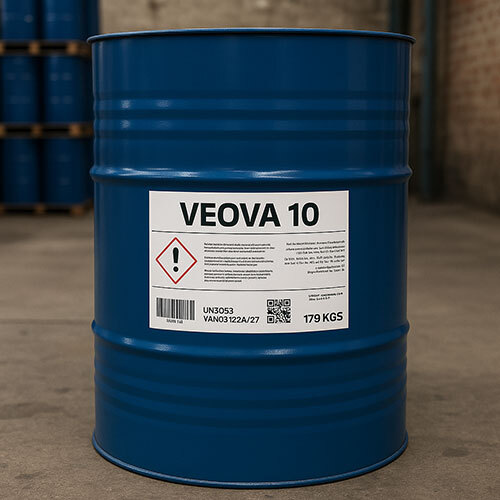
VEOVA 10 (Vinyl neodecanoat)

VEOVA 10 (Vinyl neodecanoat)

Minimum Order Quantity : 200 Kilograms

Physical Form : Liquid

Grade : industrial

Usage : Used in emulsion polymers, coatings, adhesives, and paints for improved durability and resistance

DIMETHYLAMINOETHYL METHACRYLATE (DMAEMA)

DIMETHYLAMINOETHYL METHACRYLATE (DMAEMA)

Minimum Order Quantity : 200 Kilograms

Physical Form : Liquid

Grade : Industrial

CAS No : 2867472

Molecular Formula : C8H15NO2

Usage : Used as synthesis of poly ((2(Dimethylamino)ethyl methacrylate) block copolymers of 2(Dimethylamino)ethyl methacrylate and nbutyl methacrylate amphiphilic AB block copolymers of 2(Dimethylamino)ethyl methacrylate

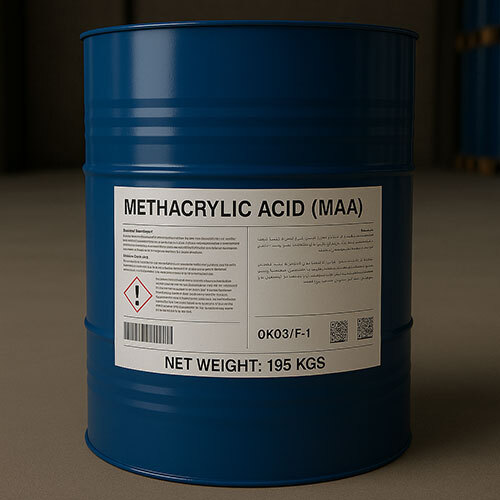
METHACRYLIC ACID (MAA)

METHACRYLIC ACID (MAA)

Minimum Order Quantity : 200 Kilograms

Physical Form : Liquid

Grade : Industrial

CAS No : 79414

Molecular Formula : C4H6O2

Usage : Coatings Pulp & Paper Paint & Varnishes Adhesives & Sealants Leather & Textile Filmforming agents Thickeners Lubricants Materials used in medicine Plastics

METHYL METHACRYLATE (MMA)

METHYL METHACRYLATE (MMA)

Minimum Order Quantity : 200 Kilograms

Physical Form : Liquid

Grade : Industrial

CAS No : 80626

Molecular Formula : C5H8O2


Back to top